
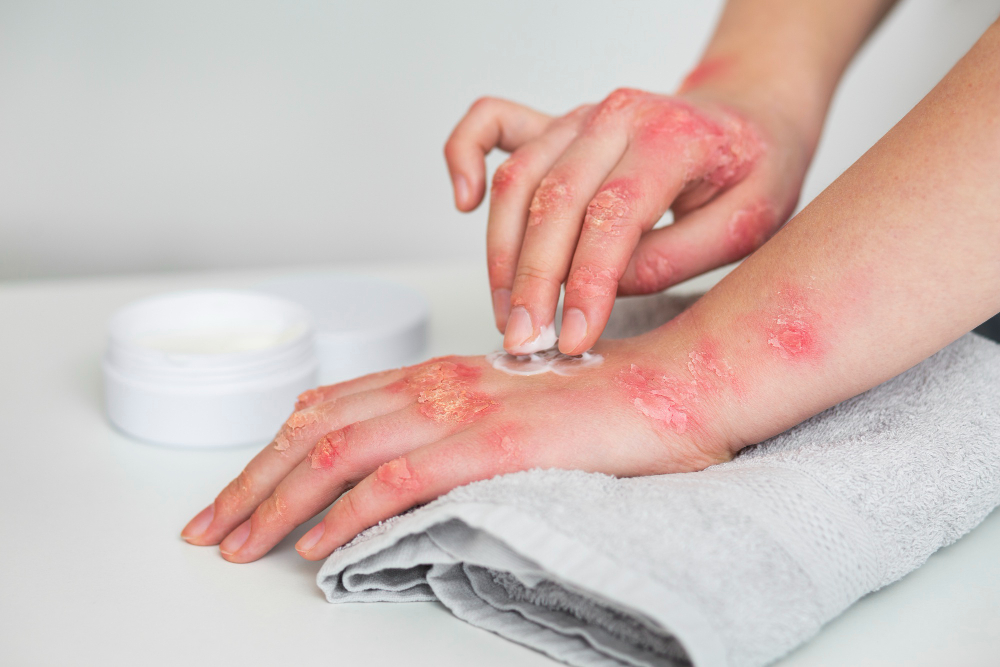
What is Dermatitis (Skin Irritation)?
Dermatitis is a common skin problem. It causes redness, itching, and swelling. Many people call it skin irritation. The treatment of dermatitis depends on the type and cause. For example, some people get it from allergies, while others have dry skin. Although it is not usually dangerous, it can be uncomfortable. Understanding dermatitis helps you find the right relief.
Common Symptoms of Dermatitis
Dermatitis can look different for each person. However, some signs are very common. You may notice:
Sometimes, symptoms appear on the hands, face, or legs. In addition, some people get it behind the knees or elbows. If you notice these signs, you may have dermatitis.
Causes and Risk Factors
Many things can cause dermatitis. For instance, some people react to soaps or chemicals. Others may have allergies to plants or foods. In addition, dry weather can make skin irritation worse. Common causes and risk factors include:
However, not everyone with these risk factors will get dermatitis. But knowing your triggers can help you avoid flare-ups.
Diagnosis of Dermatitis
Doctors can often diagnose dermatitis by looking at your skin. Sometimes, they may ask about your symptoms and daily habits. In some cases, they might do a patch test. This test checks for allergies. For example, if you react to a certain soap, the test can show it. Early diagnosis helps you start the right dermatitis treatment options quickly.
Effective Treatment Options for Dermatitis
The treatment of dermatitis depends on the cause and severity. However, many people find relief with these options:
In addition, always follow your doctor’s advice. For children, use gentle products and avoid harsh soaps. According to the CDC, most cases improve with proper care.
Home Remedies and Lifestyle Tips
Many people ask how to relieve skin irritation at home. While medical treatment is important, you can also try these tips:
For example, people living in cold or dry areas should moisturize more often. These best remedies for dermatitis can help manage symptoms at home.
Prevention Strategies
Although you cannot always prevent dermatitis, you can lower your risk. Try these prevention tips:
In addition, keeping your home at a comfortable humidity level can help. Prevention is key to managing dermatitis at home.
When to See a Dermatologist
Sometimes, home care is not enough. You should see a dermatologist if:
Early medical advice can prevent complications. For personalized care, always consult a skin specialist.
In summary, the treatment of dermatitis includes medical care and home remedies. However, each person’s needs are different. Consult a dermatologist for personalized advice and effective dermatitis treatment.